
Most of our North Fork Rye Whiskey goes through a solera system — younger whiskey blended with older, barrel after barrel, to keep the flavor consistent from bottle to bottle. It's been running since 2011, and it's never been fully emptied.
North Fork Blue Label breaks that rule on purpose.
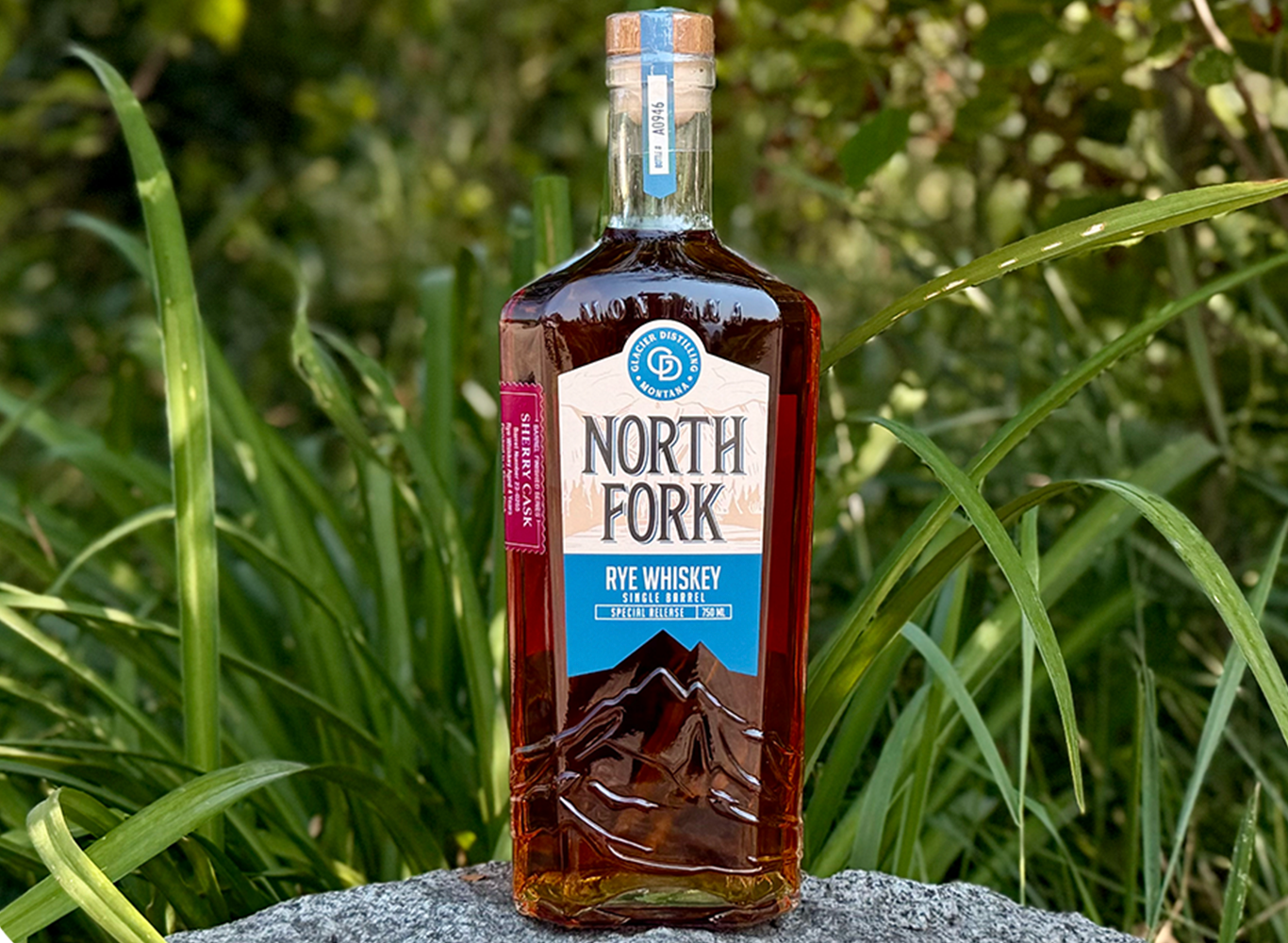
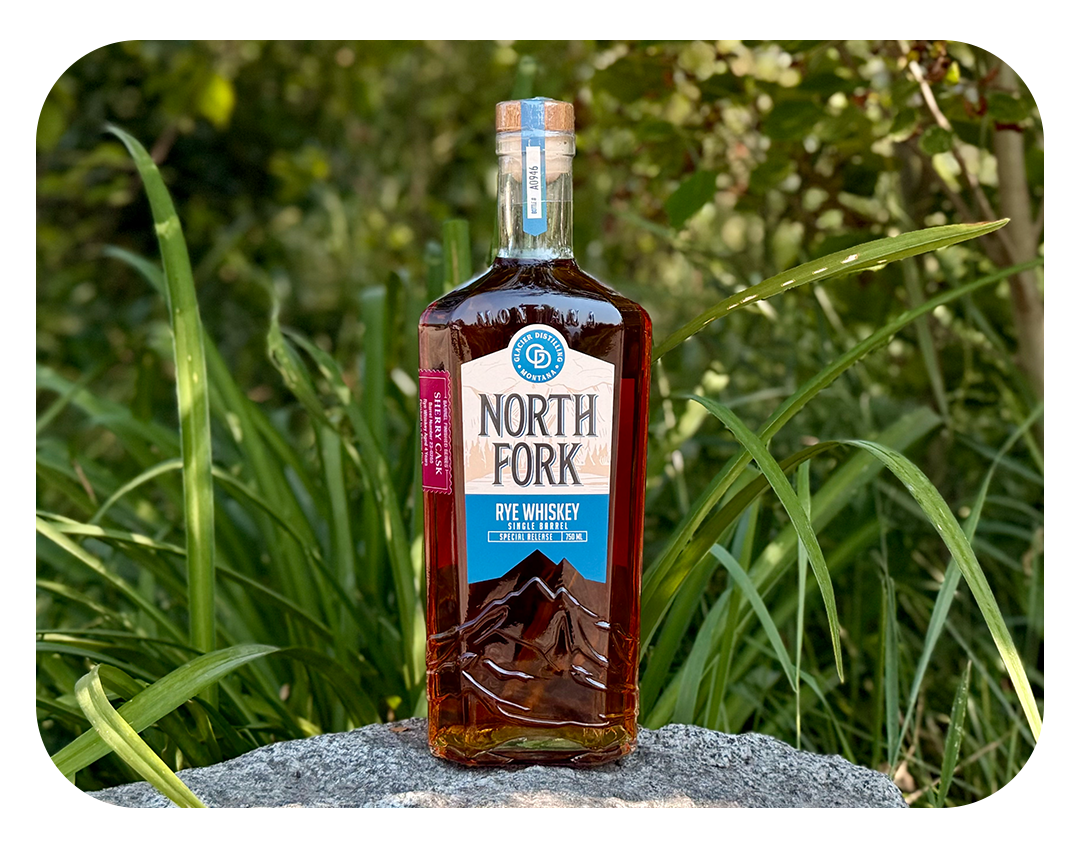
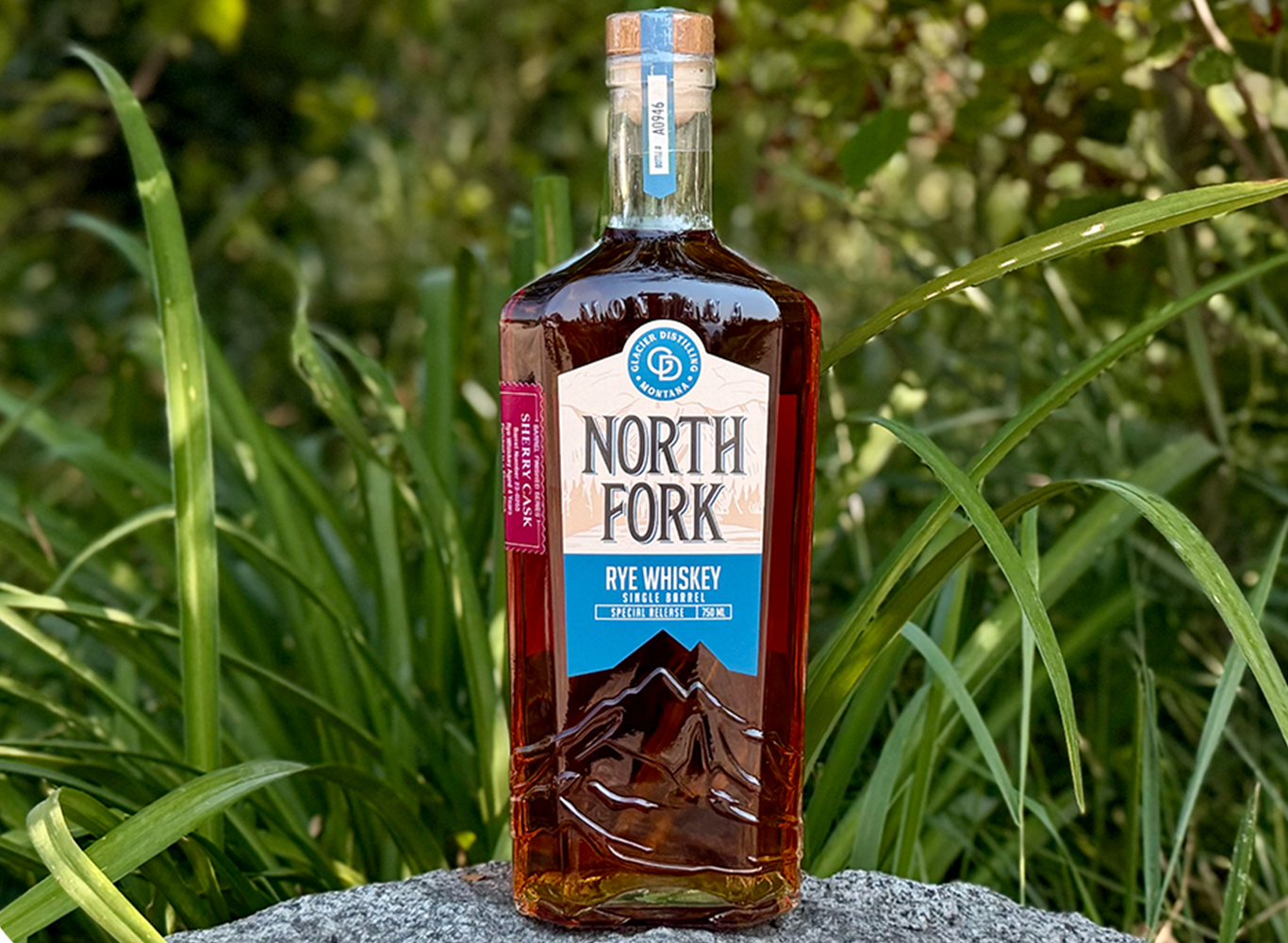
Discover North Fork Blue Label Sherry Cask, a limited Glacier Distilling release aged four years in American oak and finished six months in a sherry cask.
What Blue Label Actually Is
Blue Label is our small-batch series where a finished whiskey gets a second life in a different barrel. Every release starts with a different base whiskey and ends up in a different finishing barrel, so no two releases taste alike — and once a batch is gone, that exact combination doesn't come back.
The Current Release: Rye, Finished in Sherry
The previous release, the Cognac Cask, is officially sold out. The next one has arrived, and it's worth understanding, not just drinking.
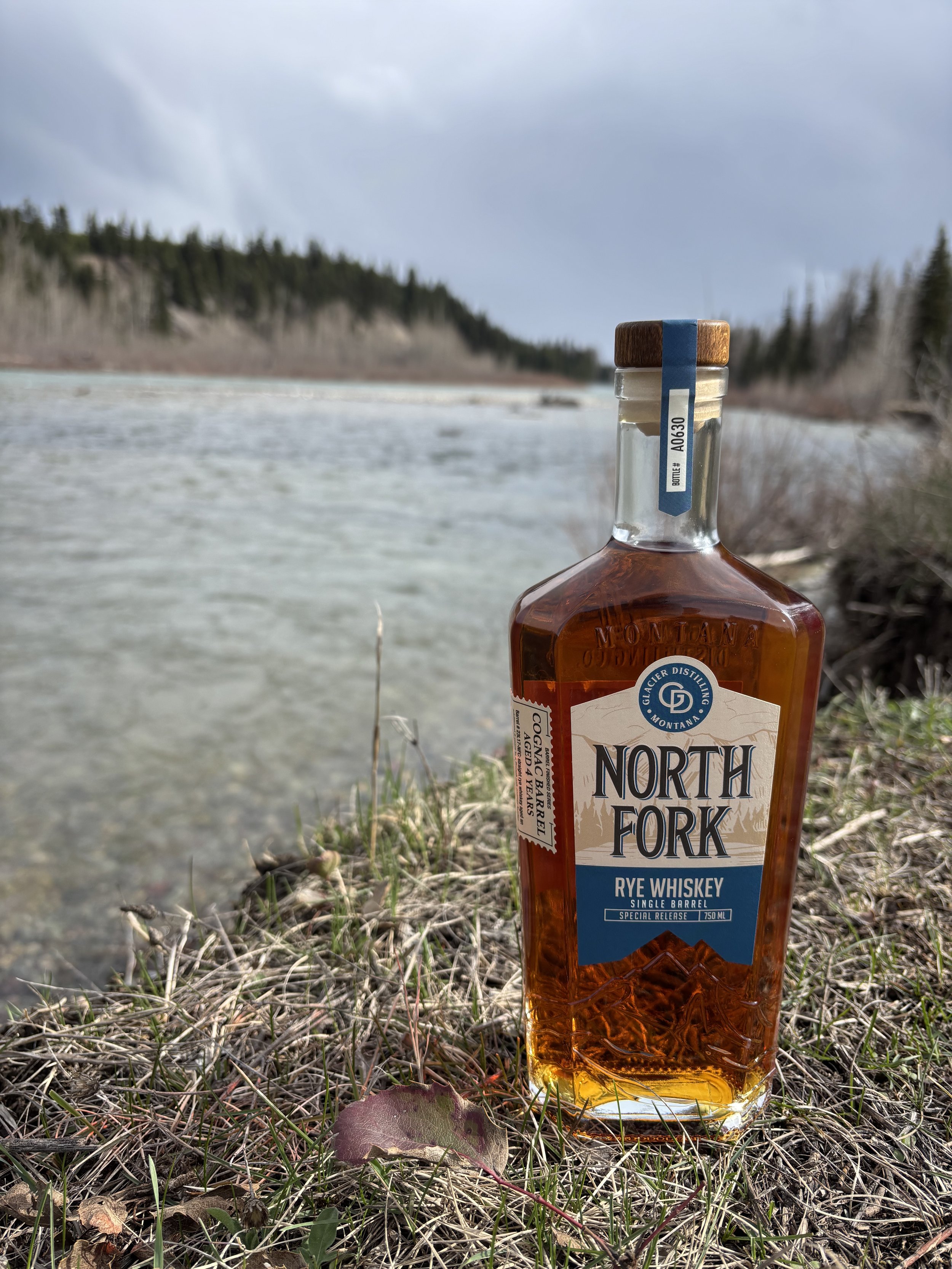
Our previous release of North Fork Blue was finished in a Cognac Cask. It’s sold out now - but we’re on to the next barrel finishing project!
This batch started as rye whiskey aged four years in new American oak — the classic bourbon-style barrel that gives whiskey its color and most of its backbone. From there, it spent six more months in a sherry cask.
That second barrel is called a finish. To understand why it works, it helps to know what a barrel actually does to whiskey in the first place — and where the idea of a "second barrel" even came from.
What Actually Happens Inside a Barrel
Whiskey coming off the still is clear, sharp, and not something most people would want to drink. Everything that makes it look and taste like whiskey — the color, the vanilla and caramel notes, the smoothness — comes entirely from the barrel. That happens through three things going on at once, all year, every year the whiskey sits inside the wood:
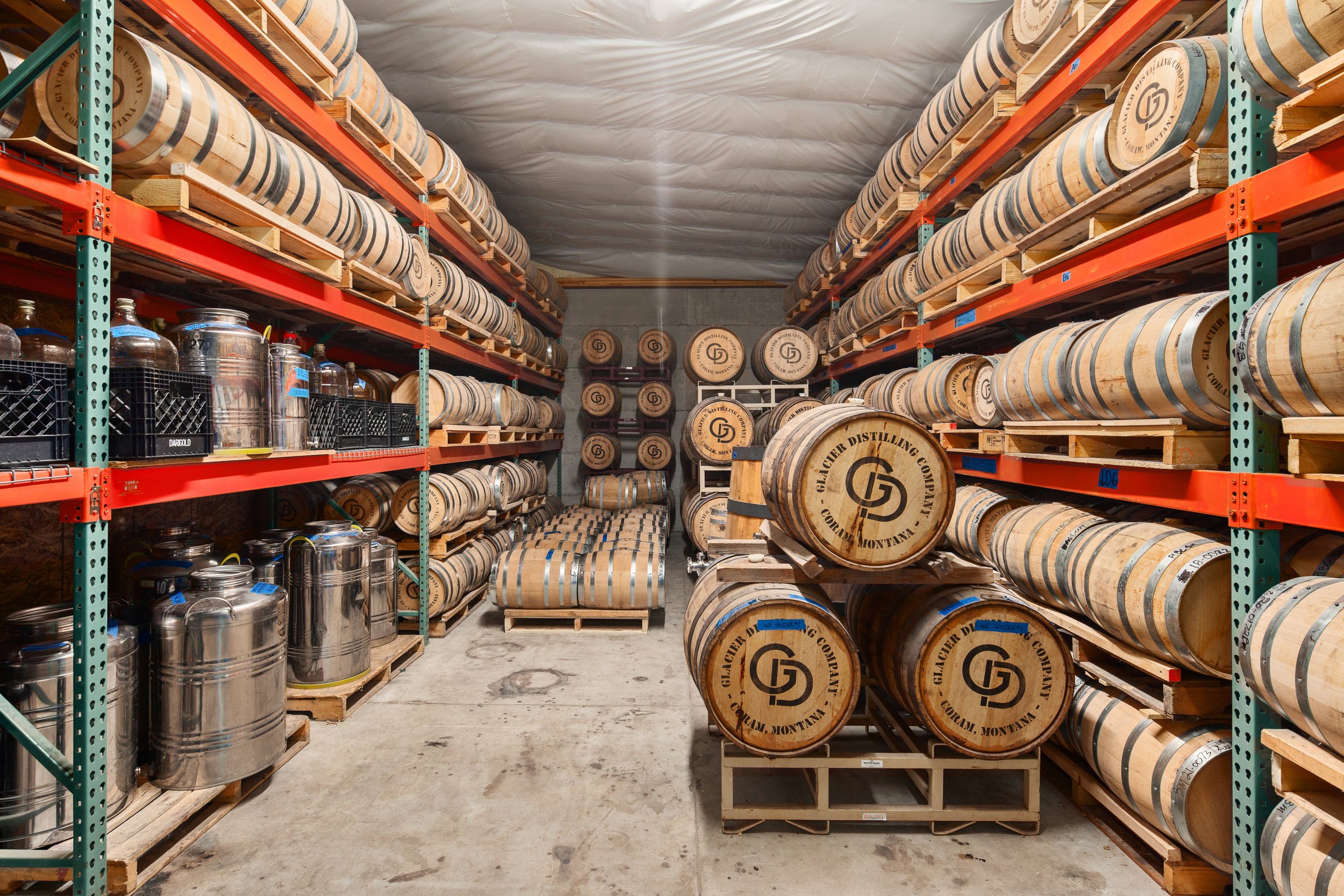
Extraction. Alcohol is a solvent — it pulls compounds out of the wood the same way water pulls flavor out of a tea bag. Oak contains vanillin (which tastes like vanilla), tannins (which give structure and a slight dryness), and lactones (which show up as coconut and toasted-wood notes). None of that is added to the whiskey — it's already sitting in the wood, waiting to be drawn out.
Oxidation. Barrels aren't sealed shut. Wood is porous, so small amounts of air move in and out through the staves over time. That slow oxygen exchange softens harsh edges in the spirit and helps build new aroma compounds that weren't in the whiskey — or the wood — to begin with.
Evaporation. Some of the liquid escapes through the wood as vapor every year — distillers call it the "angel's share." What's left behind becomes more concentrated, which is part of why longer-aged whiskey often tastes richer.
Charring the inside of the barrel — which every new whiskey barrel goes through before it's ever filled — amplifies all of this. The char caramelizes the wood sugars right at the surface and creates a layer of activated wood that filters the spirit as it moves in and out during temperature swings.
Where the Idea of a Second Barrel Came From
Aging whiskey in oak is centuries old. Deliberately moving whiskey into a second, different barrel partway through — what the industry now calls "cask finishing" — is much newer, and it has a name attached to it.
In 19th-century Scotland and Ireland, whisky merchants often also dealt in wine and sherry. When those wine casks were emptied, refilling them with whisky was simply cheaper than buying new barrels. Over time, people noticed the whisky that had spent time in old sherry casks tasted noticeably better — but this was a byproduct of cost-cutting, not a deliberate technique.
The intentional version — aging whisky most of the way in one barrel, then deliberately transferring it to a different barrel for a shorter final stretch specifically to add flavor — was pioneered in the early 1980s by David Stewart, malt master at The Balvenie distillery in Scotland. Stewart experimented with taking whisky matured in American oak and moving it into a sherry cask for a short second stage. The result was released as Balvenie Classic, later renamed Balvenie DoubleWood. Other distilleries, notably Glenmorangie, followed within a few years, experimenting with port, Madeira, and other wine casks. By the 1990s, cask finishing had spread across the whisky world and into bourbon and rye as well.
Why a Finish Is Different from Just Aging Longer
A finish isn't a longer version of the same process — it's a short second round of extraction, using a barrel that held something else entirely.
The sherry cask this batch spent six months in previously held sherry for years. That time left behind residue in the wood: sugars, wine compounds, and flavor that soaked into the oak itself. When whiskey goes into that barrel, it pulls those compounds out the same way it pulled vanillin and tannins out of the original oak — except now it's picking up dried cherry, orange peel, fig, toasted walnut, and dark cocoa, flavors a plain oak barrel could never produce on its own.
Six months isn't long enough to fundamentally remake the whiskey underneath — the backbone from four years in new oak is still there. It's enough time to layer something new on top of it.
And What a Solera Is, for Comparison
If you've had our standard North Fork Rye, you've already tasted the product of a different system entirely — one that's worth understanding alongside finishing, because the two do almost opposite jobs.
A solera is a stack of barrels at different ages. When whiskey is drawn off the oldest barrel for bottling, that barrel gets topped back up with whiskey from the next-oldest barrel, which in turn gets topped up from the barrel behind it, and so on, down the line to the newest whiskey at the top. Nothing is ever fully emptied — a small amount of the original liquid theoretically stays in circulation indefinitely, blended in smaller and smaller fractions as the years go on.
The idea comes from Jerez, in southern Spain, where sherry producers developed it in the 1700s to solve a different problem than finishing solves. Vintage-dated wine varies year to year — a good year and a bad year taste different, and customers didn't want that unpredictability in their sherry. A solera fixes that by constantly blending old and new together, so no single year's batch — good or bad — defines the final product. Our North Fork Rye solera has been running the same way since 2011, which is exactly why it tastes essentially the same today as it did years ago.
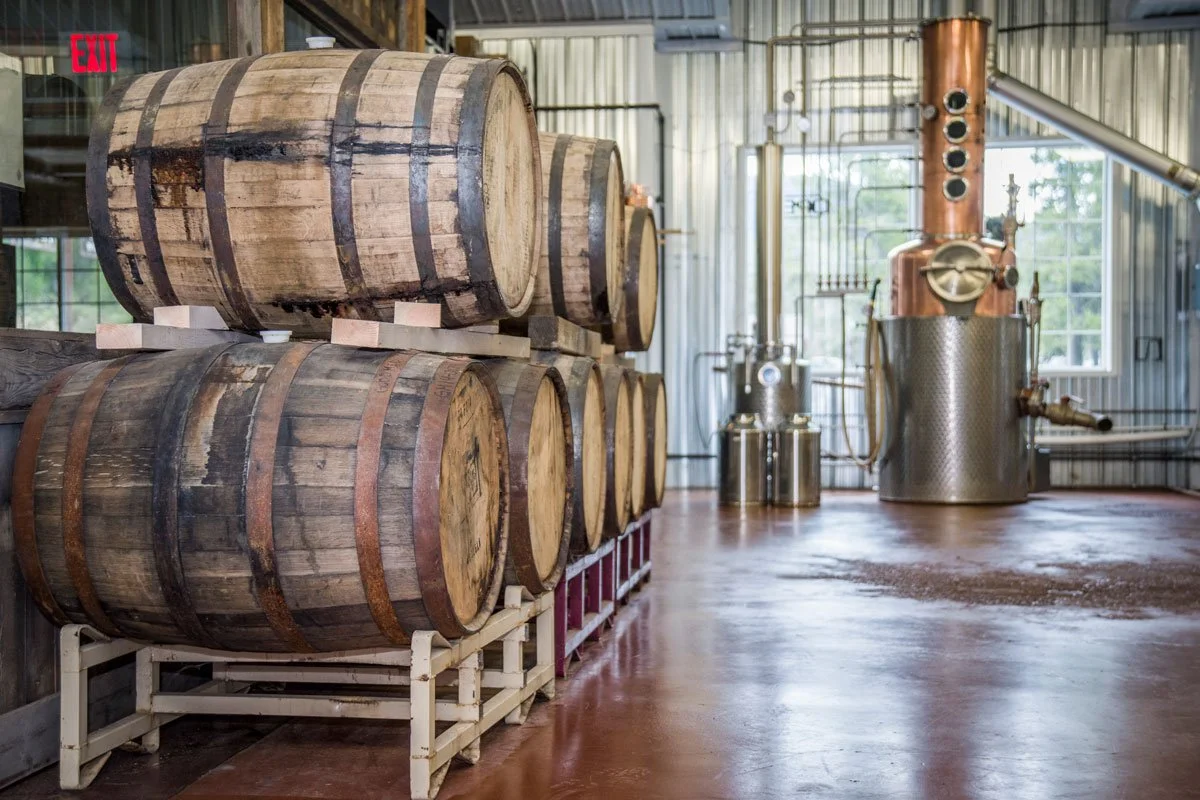
Finishing and soleras are solving opposite problems. A solera exists to erase variation — to make sure a bottle tastes the same as the last one and the next one. A finish exists to create variation on purpose — to make one batch taste different from everything that came before it. Blue Label only works because it's deliberately built outside the solera, as a one-off, instead of being folded back into it.
Why It's Worth Seeking Out
North Fork Rye earned its reputation the consistent way — gold medal, San Francisco World Spirits Competition, the same profile bottle after bottle. Blue Label is the other side of that coin: proof that the same base whiskey can go somewhere the solera never would, just by changing what it rests in next.
It's limited by nature, not by marketing. Once a batch is gone, that particular combination — this base whiskey, in this barrel, for these six months — doesn't come back
North Fork Blue Label is available only in our tasting room or at select Montana liquor stores.
Sources
The History of Cask Finished Whiskies — Whisky Advocate
What is cask finishing for whisky? — Master of Malt
Cask Finishing: A Guide to Whiskey's Secondary Maturation — Distiller
A Guide to Barrel Aging Whiskey — Blind Barrels
The Solera System of Aging Wine — MasterClass
The Solera System: Ageing Sherry — SherryNotes
About Glacier Distilling
Glacier Distilling is a small-batch craft distillery in Coram, Montana, just outside Glacier National Park. We make whiskey and spirits the Montana way—with local grains, real fruit, pure glacial water from the Northern Rockies, and a hands-on approach from start to finish. Every bottle is crafted right here in Coram, with a focus on where it comes from and what goes into it.
Come see us: Visit our tasting room near Glacier National Park to taste our spirits, enjoy a cocktail, and discover bottles you won’t always find anywhere else.
Shop online: Can’t make it to Montana? Select Glacier Distilling spirits are available to order online and ship to eligible states through our licensed partners at Big Thirst. Shop our Online Store >
Bearproof Huckleberry Whiskey and Logan Pass American Single Malt both just won Double Gold at the SIP Awards — two Montana whiskeys, one bundle.