
Barrel Season: How Montana’s Cold Shapes Our Whiskey
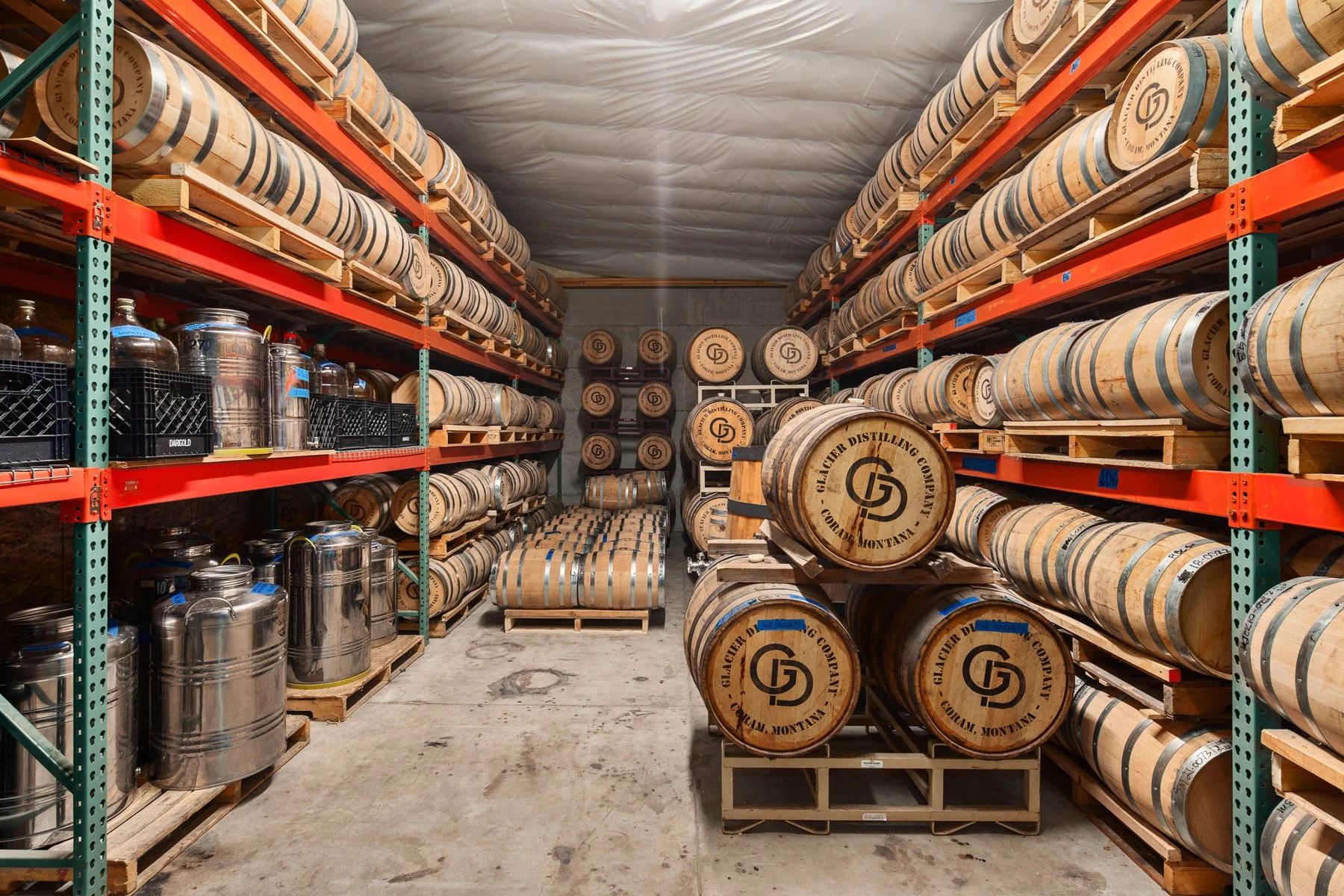
The view into one of our barrel resting rooms at Glacier Distilling
Ever wonder how the changing seasons affect whiskey?
At Glacier Distilling, nestled in the foothills of Glacier National Park, we don't just work with the weather we embrace it. It is all a part of the process.
What Is “Barrel Season”?
As winter sets in across Northwest Montana, the pace of whiskey aging changes. Distillers refer to this time of year as barrel season. This is a natural pause in the aging process when colder temperatures slow the whiskey’s interaction with oak. Instead of racing through the wood grain like it does in summer, the spirit begins to rest. It breathes more slowly, allowing flavors to settle, soften, and deepen.
How Summer and Winter Work Together
Both seasons play a crucial role. In summer, heat causes the whiskey to expand into the barrel staves, pulling flavor compounds like vanillin, toasted sugars, and spice from the oak. This is the bold extraction phase—fast, intense, and flavor-rich.
In winter, the process shifts. We allow our rackhouse temperatures to drop just above freezing. The whiskey contracts, retreating from the wood and bringing those extracted compounds back into the spirit. It’s a slower phase that focuses on refinement. Flavors begin to integrate, adding balance and complexity.
Montana’s Cold Climate Advantage
Here in Northwest Montana, our winters hit harder than in traditional whiskey regions. While we keep the rackhouse from freezing, we let it get cold enough to matter. Some barrels are even aged in unheated spaces, where temperatures can dip to -20°F. These experimental batches help us explore how extreme cold shapes flavor and texture.
Why It Matters
Winter aging isn’t idle time. It’s when the whiskey settles, harmonizes, and gains depth. The contrast between warm summers and cold winters gives our spirits a layered character that reflects the landscape around us.
Every season leaves its mark. And that’s exactly how we like it.